Blog

  • Open Source and SaaS

    Now that I work in an engineering environment tailored for SaaS development, I’ve developed a better understanding of the challenges they face when open sourcing their code. I wrote it up for OpenSource.com in a 2-part article, “How to decide whether to open source your SaaS solution.

    Some tidbits:

    The decision to open source code requires a fair bit of planning if you want to do it right, especially when it comes to user support and documentation. In the case of SaaS, the required planning is different, although it shares some factors with any open source effort. In my series, How to Make Money from Open Source Platforms, I focused on software that exists solely to be deployed on a computer, whether on a local machine, in a data center, or in a cloud platform (yes, I know the last two are redundant).

    There was a simple reason for this focus: It was what I knew. In my career, I have always worked with software, of commercial and community origins, to be installed somewhere. Now I work directly with engineers who take software designed to work solely on their website and with their particular infrastructure, automation, and orchestration. The fact they have been able to take this software and offer it to others in a way that is not only usable but can actually power other businesses is a testament to their commitment to an open source world.

    This article attempts to summarize their experience and point out lessons to draw from it. I’ll also try to identify how open source efforts relate to business and product strategy for SaaS models.

    I try to go into some level of detail, using my favorite tool: supply chain funnel analysis. If you’re looking into taking your SaaS code open source, I hope this helps you.

    Read the full article

  • Prague Symposium Agenda – Oct 26

    As part of our ongoing relationship with the Linux Foundation, we have another symposium coming up this week, co-located with the Open Source Summit in Prague. (Registration is $150 for OS Summit attendees) We have a great agenda!

    What: Open Source Entrepreneur Symposium

    When: Thursday, October 26, 9:00 – 17:00

    Where: “London” Conference Room, Open Source Summit

    Tickets: Add to your Open Source Summit Europe registration – inquire at the registration desk.

    Agenda

    9:00 – There is no Open Source Business Model – Stephen Walli, Microsoft

    9:55am – Bootstrapping is the New Black: Building a Profitable Open Source Enterprise from Day One – Leslie Hawthorn, Red Hat, and Beth “pidge” Flanagan, Togan Labs

    10:50 – coffee break

    11:00 – Innovating in the open: Lessons from a 3 time founder of successful open source based businesses – Evan Powell, Cloudbyte

    12:00 – Lunch

    13:15 – Managing internal or external open source supply chains – Shane Coughlan, Leader, Open Chain Project

    14:10 – Why contributing upstream is sustainable engineering – Colin Charles, Percona

    15:00 – break

    15:10 – The great open source business model smackdown. It’s the debate to end all debates! Evan Powell, Stephen Walli, Beth Flanagan, and Colin Charles

  • Podcast: Shane Coughlan of Openchain

    Podcast: Shane Coughlan of Openchain

    Shane Coughlan is the founder and manager of the Openchain Project, which “builds trust in open source by making open source license compliance simpler and more consistent.” As any software asset management person can tell you, they get cross-eyed when it comes to open source license compliance. My opinion has always been that this was due to lack of information outside of the immediate sphere of open source developers. The Openchain Project aims to remedy that, and in this podcast we talked about the challenges of doing that. It’s a great listen!

  • TechRepublic: Open Source and Corporate Funding

    I have more to say about this. See the original article on TechRepublic.

    Basic argument goes like this, “individual developers working in their mom’s basement no longer drive open source development! Now it’s all about the corporate $$$$.” My initial thought is “duh”. I’ve always felt that the narrative about a decentralized army creating amazing software that undermined large vendors was entirely wrong. So it’s not that open source is “increasingly” about corporate funding – it was *always* about corporate funding. And as I’ve mentioned elsewhere, open source is not free software. Free software, also known as software freedom, has been about the rights of individual developers and users against the IP cabal of the TIC (techno industrial complex). Open source was about, “yeah, that’s great – but how can I profit from that?”

    So congrats to TechRepublic for being about 15 years behind. I guess?

  • EnterpriseIT Writeup on LA Symposium

    EnterpriseIT Writeup on LA Symposium

    If you’ve been watching this space, you know we’ve been gearing up for our LA symposium on September 14, co-located with the Linux Foundation’s Open Source Summit. Swapnil Bhartiya walks through the different talks and why you should go – as well as a good bit from me about OSEN and the event:

    “The secret of 21st century innovation is that much of it doesn’t happen inside software vendors anymore, rather the most innovative companies have learned how to make use of all the innovation that happens outside their office walls and often beyond their control.

    So how does one take advantage of the open source innovation happening outside of your purview? And learn how to build products and business in this new collaborative model? That’s why you should attend – RSVP now ($149.99).

  • Is Open Source More Risky?

    Is Open Source More Risky?

    There’s been a long-running debate over open source and security, and it goes something like this:

    Pro: Open source is awesome! Given enough eyes, all bugs are shallow. This is why open source software is inherently more secure.

    Con: Hackers can see the code! They’ll look at the source code and find ways to exploit it. This is why open source software is inherently more insecure.

    And on and on… ad nauseum. There are a variety of studies that each side can finger to help state their case. The problem as I see it, is that we’re not even talking about the same thing. If someone says open source software is more or less secure, what are they actually talking about? Do they mean software you download from the web and push into production? Or do they mean vendor-supported solutions? Unless we can agree on that, then any further discussion is pointless.

    Open Source Products

    So let’s shift the conversation to an apples vs. apples comparison so that we’re discussing the same things. According to a survey by Black Duck, upwards of 96% of commercial software solutions use open source software to some extent. This means virtually *all* new software solutions use open source software. So, when someone argues whether open source is more or less secure, the question to ask is, “more or less secure than *what*?” Because as we can see, the number of software solutions that *don’t* use open source software is rapidly dwindling.

    To save everyone’s breath, let’s change the dynamics of this conversation. Let’s compare “raw” upstream open source code vs. supported software solutions backed by a vendor. As I’ve mentioned before, you can do the former, but it helps if you’re Amazon, Google or Facebook and have an army of engineers and product managers to manage risk. Since most of us aren’t Amazon, Google or Facebook, we usually use a vendor. There are, of course, many grey areas in-between. If you choose to download “raw” code and deploy in production, there are naturally many best practices you should adopt to ensure reliability, including developing contingency plans for when it all goes pear-shaped. Most people choose some hybrid approach, where core, business-critical technologies come with vendor backing, and everything else is on a case-by-case basis.

    So, can we please stop talking about “open source vs. proprietary”? We should agree that this phrasing is inherently anachronistic. Instead, let’s talk about “managed” vs. “unmanaged” solutions and have a sane, productive discussion that can actually lead us forward.

  • Transform Your Business with Open Source Entrepreneurship

    Transform Your Business with Open Source Entrepreneurship

    This is a webinar I did for the Linux Foundation earlier this month. If you missed it, you can catch it on demand!


  • DevOps is not enough

    Or: My source code is your platform, and vice-versa.

    https://twitter.com/i/moments/897859467529912321

    https://twitter.com/johnmark/status/897837253946466304

  • Linux.com: 4 Quadrants of Open Source Entrepreneurship

    Linux.com: 4 Quadrants of Open Source Entrepreneurship

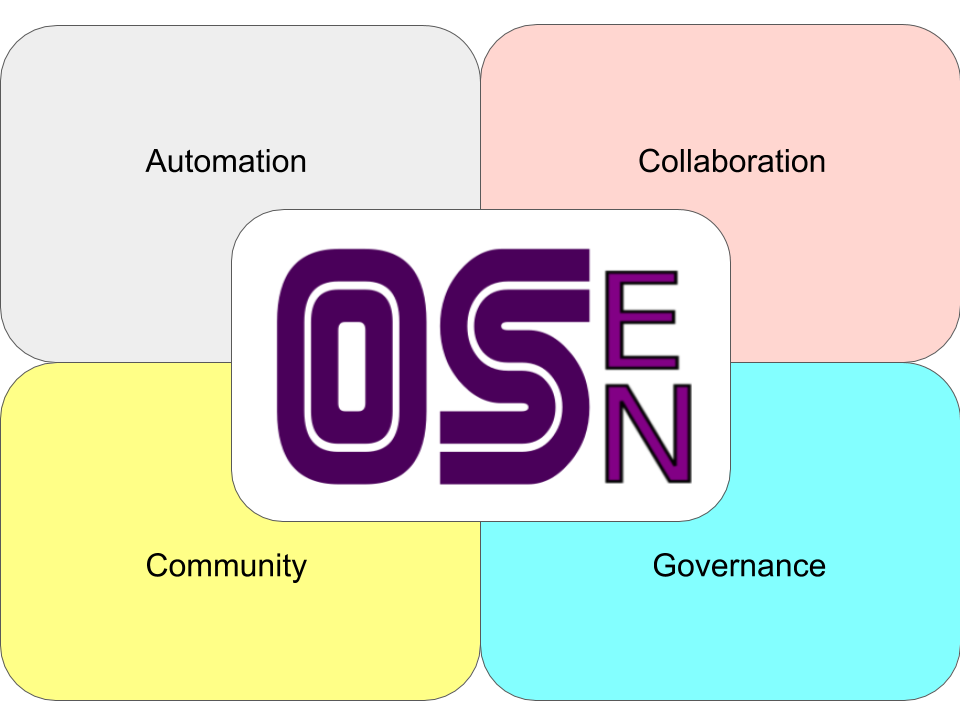
    In light of my Linux Foundation webinar, Building a Business on Open Source, (today, August 1, at 10am PDT/1pm EDT) as well as upcoming meetups and the OSEN Symposium co-located with Open Source Summit, I wrote a piece all about the 4 areas that define open source entrepreneurship: Automation, Collaboration, Community and Governance.

    Lots of companies, even large proprietary ones, had started to use open source software in their products and services, but there was very little in the way of sharing that came from them. Even so, many of them did a poor job of participating in the upstream communities that created the software they used. Shouldn’t these companies get the full benefit of open source participation? I also came across a few startups who wanted to participate in open source communities but were struggling with how to find the best approach for open source participation while creating great products that would fund their business. Most of them felt that these were separate processes with different aims, but I thought they were really part of the same thing. As I continued down this fact-finding path, I felt strongly that there needed to be more resources to help businesses get the most out of their open source forays.

    Read the full article at Linux.com.

  • OSEN Symposium Program Revealed

    OSEN Symposium Program Revealed

    We’re happy to announce that we have set the preliminary agenda for the OSEN Symposium, co-located with the Linux Foundation’s Open Source Summit in Los Angeles on September 14.

    We have an incredible lineup!

    9am: The Principles of Open Source Entrepreneurship

    John Mark Walker, Creator of OSEN

    10am: How to successfully enter the FOSS emerging market

    VM Brasseur, Technical Business and Open Source Strategy Consultant

    11am Innovating in the open: Lessons from a 3 time founder of successful open source based businesses

    Evan Powell, CEO, Cloudbyte

    1pm There is no Open Source Business Model

    Stephen Walli, Open Source and Tech Strategy Consultant

    2pm Effective Business Leadership with Open Source Supply Chain Management

    Shane Coughlan, OpenChain Project Leader

    3pm The World Bank GeoNode Study: 200% ROI on Open Source Community Participation

    James Vasile, Partner at Open Tech Strategies

    Register today!