This is a webinar I did for the Linux Foundation earlier this month. If you missed it, you can catch it on demand!
- Linux Foundation webinar link: Open Source Entrepreneurship – How to Build a Business on Open Source

This is a webinar I did for the Linux Foundation earlier this month. If you missed it, you can catch it on demand!
Or: My source code is your platform, and vice-versa.
https://twitter.com/i/moments/897859467529912321
https://twitter.com/johnmark/status/897837253946466304
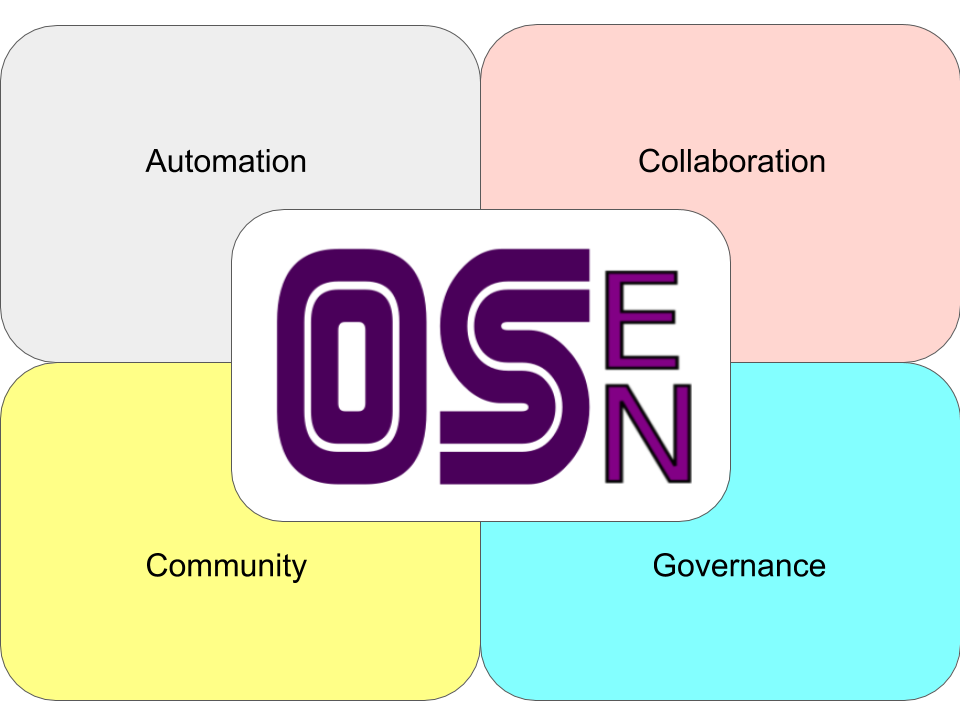
In light of my Linux Foundation webinar, Building a Business on Open Source, (today, August 1, at 10am PDT/1pm EDT) as well as upcoming meetups and the OSEN Symposium co-located with Open Source Summit, I wrote a piece all about the 4 areas that define open source entrepreneurship: Automation, Collaboration, Community and Governance.
Lots of companies, even large proprietary ones, had started to use open source software in their products and services, but there was very little in the way of sharing that came from them. Even so, many of them did a poor job of participating in the upstream communities that created the software they used. Shouldn’t these companies get the full benefit of open source participation? I also came across a few startups who wanted to participate in open source communities but were struggling with how to find the best approach for open source participation while creating great products that would fund their business. Most of them felt that these were separate processes with different aims, but I thought they were really part of the same thing. As I continued down this fact-finding path, I felt strongly that there needed to be more resources to help businesses get the most out of their open source forays.
Read the full article at Linux.com.
We’re happy to announce that we have set the preliminary agenda for the OSEN Symposium, co-located with the Linux Foundation’s Open Source Summit in Los Angeles on September 14.
We have an incredible lineup!
9am: The Principles of Open Source Entrepreneurship
John Mark Walker, Creator of OSEN
10am: How to successfully enter the FOSS emerging market
VM Brasseur, Technical Business and Open Source Strategy Consultant
11am Innovating in the open: Lessons from a 3 time founder of successful open source based businesses
Evan Powell, CEO, Cloudbyte
1pm There is no Open Source Business Model
Stephen Walli, Open Source and Tech Strategy Consultant
2pm Effective Business Leadership with Open Source Supply Chain Management
Shane Coughlan, OpenChain Project Leader
3pm The World Bank GeoNode Study: 200% ROI on Open Source Community Participation
James Vasile, Partner at Open Tech Strategies
One of the most frustrating parts of being in open source circles is battling the conventional wisdom in the Valley that open source is just another way to do marketing. It’s complicated by the fact that being a strong open source participant can greatly aid marketing efforts, so it’s not as if marketing activities are completely unrelated to open source processes. But then something happens that so aptly demonstrates what we mean when we say that Silicon Valley has largely been a poisonous partner for open source efforts. Which brings me to this week’s brouhaha around a silly valley startup looking to “Make money fast!” by glomming onto the success of open source projects.
To quote from the article:
After being hired by Kite, @abe33 made an update to Minimap. The update was titled “Implement Kite promotion,” and it appeared to look at a user’s code and insert links to related pages on Kite’s website. Kite called this a useful feature. Programmers said it was not useful and was therefore just an ad for an unrelated service, something many programmers would consider a violation of the open-source spirit.
It’s the “stealing underpants” business model all over again.
Step 1 above is why we actually have valley poseurs who unironically refer to themselves as “growth hackers.” Only in the valley.
The really sad part of this is that the methodology outlined above is terrible, not just because it’s unethical, but because it’s counterproductive to what Kite wants to accomplish. As I’ve mentioned countless times before, a project is not a product, and trying to turn it into one kills the project. The best way to make money on open source is to, big surprise, make a great product that incorporates it in a way that adds value to the customer. In this example, this means taking projects like minimap and autocomplete-python, producing commercial versions of them, and make them part of an existing product or offer them up as separate downloads – from the company site or part of a commercial distribution.
The worst part of all this is there are still investors and business folks who think that doing is Kite did is the only way to make money from an open source project. It’s not. It’s a terrible maneuver from both an ethics as well as product development standpoint. It’s once again conflating open source with marketing, which is one of the reasons I started this site – it’s an unforced error and should be part of any “open source product 101” curriculum.
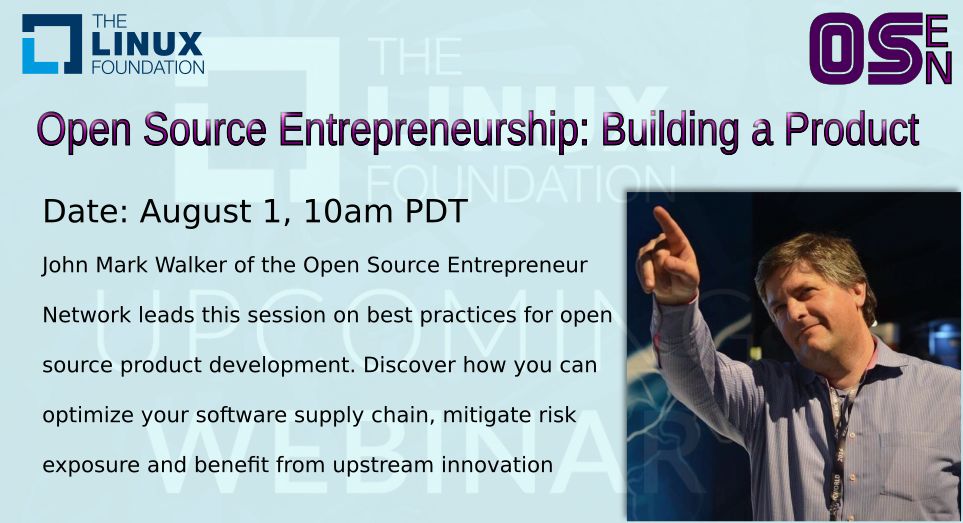
I’m happy to announce that on August 1, 10am PDT/1pm EDT, I will be leading a webinar from the Linux Foundation on open source entrepreneurship. “What is that?” you may ask. Open source entrepreneurship is the compendium of ideas around building your business process on open source principles. This means optimizing for open source collaboration, code and communities. Here are some qualities often exhibited by open source entrepreneurs:
As we learn more about the pervasiveness and ubiquity of open source code, we’re finding that “open source” means so much more than what license you use or the source code you utilize. Open source is now a term of art that includes the process of collaboration, process automation, and building on the work of external ecosystems. Every product manager, engineering manager, investor, CIO/CTO and, yes, entrepreneur needs to understand these concepts intuitively.
From this webinar, attendees will gain an understanding of what it means to practice the art of open source entrepreneurship and optimize their business for the continuing open source revolution.
I’m happy to announce that we now have a space in Seattle to host a meetup on August 2. RSVP at meetup.com.
https://www.meetup.com/OSENMeetupSEA/events/241851767/
We’re looking forward to getting to know members of the Seattle open source entrepreneur community!
This will be a chance to meet and talk to experienced open sourcerers in the area. Come and trade best practices and anti-patterns with others looking to make the most of their open source experience. Open Source has transformed the technology world, and this is your opportunity to learn from the best. To spur discussion, we will feature the following speakers:
There is no Open Source Business Model
Stephen Walli: former Microsoft and Outercurve open source engineering lead, currently Docker’s open source strategist. Twitter: @stephenrwalli
There are best practices to understand when building products from open source software, but there are a number of anti-patterns that crop up along the way. Product teams (from engineering to marketing) need to understand these patterns and practices to participate best in open source project communities and deliver products and services to their customers at the same time. These patterns hold regardless of whether the vendor created and owns the project or participates in projects outside their control.
Building a business on OSS – whats in it for the community
Steve Mayzak: VP Solution Architecture at Elastic. Twitter: @smayzak
Steve will talk about his experiences working for Open Source companies and how the search for the best business model continues. He has worked at Springsource and now Elastic and built teams of Solution Architects. His goal has been to bring the best combination of OSS and Commercial software to the community to create a mutually beneficial relationship. Whats good for the community has to be good for the business and vice versa.
How to Utilize a Community Distribution in a Cloud Native Context
John Mark Walker: long-time open source product, ecosystem and community expert and founder of the Open Source Entrepreneur Network. Twitter: @johnmark
In olden times, when we used IRC and liked it, there were several steps along the way from creating an open source project to releasing a product. Some of these were artifacts of the (lack of) tooling of the time, such as the need to assemble pieces into a whole before releasing as a product. That “first cut” of distribution became a community project in itself. Now that we have better, automated tooling for development, you may be fooled into believing that this “first cut” step is no longer needed. Au Contraire! John Mark will demonstrate why this is still necessary with examples from Fedora, CloudFoundry and Moby.
Food and beverages will be served!
Harvard Business Review has an article comparing old, crusty open source code to the Y2K ordeal. Go ahead and read it – it’s worth your time.
Joshua Gans, the author, lists open source projects that are maintained by lonely developers who don’t make much money (if any) for producing their craft. He specifically calls out ntpd:
What if I told you that the entire NTP relies on the sole effort of a 61-year-old who has pretty much volunteered his own time for the last 30 years? His name is Harlan Stenn…
For a number of years Stenn has worked on a shoestring budget. He is putting in 100 hours a week to put patches on code, including requests from big corporations like Apple… And this has led to delays in fixing security issues and complaints.
Then Gans includes this bit, which is also a personal favorite of mine whenever I talk about open source product management:
…Last year we saw the consequences from this when a 28-year-old developer briefly “broke“ the internet because he deleted open-source code that he had made available. The drama occurred because the developer’s program shared a name with Kik, the popular Canadian messaging app, and there was a trademark dispute. The rest of the story is complicated but has an important takeaway: Our digital infrastructure is very fragile.
Gans then adds links and descriptions of two efforts in the code sustainability area, which are worth mentioning here: Open Collective and libraries.io. Strangely, he didn’t mention the Core Infrastructure Initiative, sponsored by the Linux Foundation, which works to address similar issues in the space.
I agree with much of what Gans writes. There is indeed a problem with unmaintained crusty code, which manifests itself in the form of security vulnerabilities and things that break more easily than they should. In fact, it’s become such a well-known issue that GitHub and others recently sponsored a conference in SF to talk about it. But in all this discussion, and in going through the non-profit organizations dedicated to working on sustainable open source code, I have to ask: where are the vendors?
As became all too apparent after reading Swapnil Bhartiya’s excellent primer on the state of IoT security (haha), this is a failure of product lifecycle management. The fact that much of the code in question is open source doesn’t really matter from a production point of view – code is code, after all. But because it is open source, this becomes a much wider scale problem, due to the ease with which it spreads from one poorly maintained repository to another. Philip DesAutels, the Linux Foundation’s IoT lead, said it best in Bhartiya’s article when he called out vendors for failing at product development basics.
On one hand, I’m glad some vendors are participating in initiatives like the CII from the Linux Foundation, but I wish there was more pressure on said vendors to collaborate on these things before it becomes a problem. This is, of course, the essence of why I created OSEN in the first place. Not enough people talk about this stuff, and I want to do my part to fix that. But I don’t think it does us much good to talk around the problem; let’s put the pressure where it should be – on the vendors. They should be working with upstream maintainers, collaborating and devoting resources where necessary, and perhaps even taking on more responsibilities with the project leadership. I know this can lead to governance issues, but the alternative is more dire.
Whether putting more effort into projects like the CII or voting with our wallets for better product development and testing, it’s time to start raising this as more of an issue. Sustainability of open source development is certainly important for future economic development, and vendors, who greatly benefit from the existence of open source code, have a responsibility to do their part.
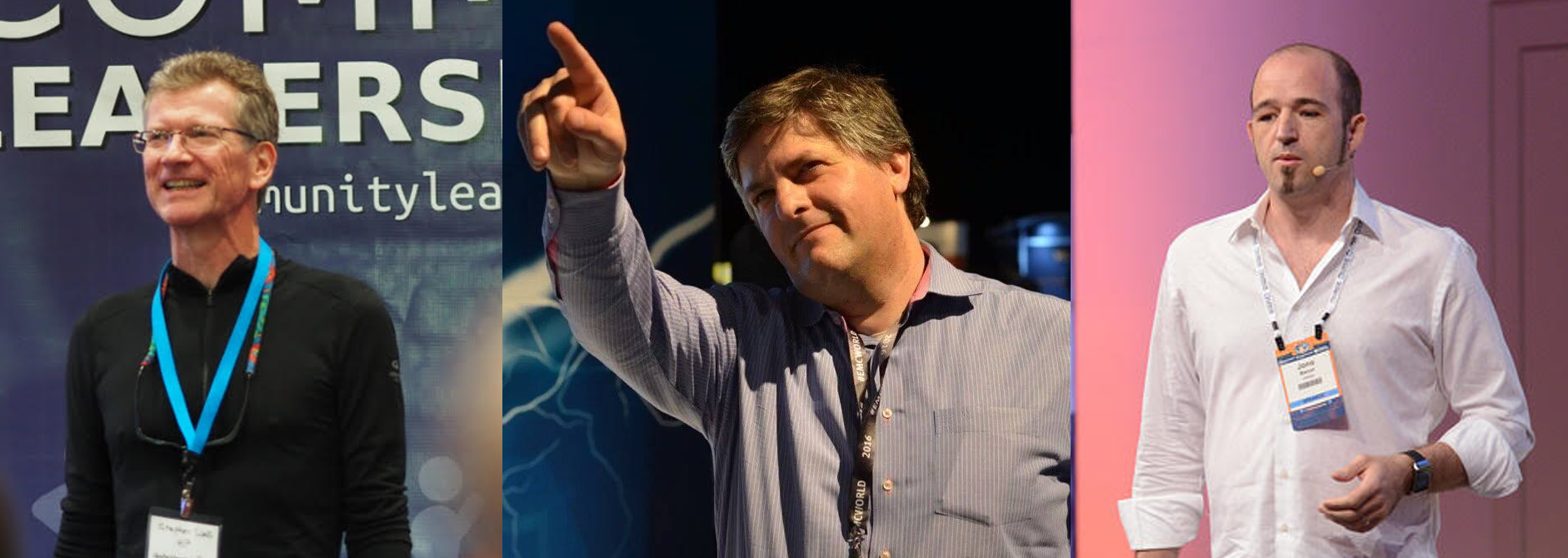
We’re coming to San Francisco! Thanks to Docker for agreeing to host us as we convene in their SOMA headquarters on August 3, 2017. Featured speakers are Stephen Wall, Jono Bacon and yours truly – more to come!
Join us for our inaugural Open Source Entrepreneur Network meetup in the Bay Area. This meetup will feature the following speakers:
Stephen Walli: former Microsoft and Outercurve open source executive, currently Docker’s open source strategist
Stephen will talk about “There is no Open Source Business Model”
John Mark Walker: long-time open source product, ecosystem and community expert and founder of the Open Source Entrepreneur Network
John Mark will present a talk on “How to Utilize a Community Distribution in a Cloud Native Context”
Jono Bacon: Founder of the Community Leadership Summit, author of The Art of Community, and now the founder of Jono Bacon Consulting
Jono will talk about “Building an Effective Community Strategy”

https://www.meetup.com/OSENMeetup/events/241212309/
Thanks to Acquia and Underscore VC for hosting our next meetup on Wednesday, July 19, at Acquia’s corporate headquarters in downtown Boston!
Here’s the agenda:
6pm: Food and drinks are served
6:30: Evan Klein, Black Duck Software
Evan is the Manager at Black Duck’s Center for Open Source Research and Innovation and wrote the 2017 Open Source Security and Risk Analysis.
Black Duck On-Demand performed security audits of more than 1000 commercial applications in 2016. Analysis of the findings confirm the importance of open source in application development, with 96% of the applications scanned utilizing open source. However, it also highlights the persistent challenges organizations face in effectively securing and managing their open source. Black Duck’s Open Source Security and Risk Analysis (OSSRA) reveals that versions of some of the most commonly used components contained high-risk vulnerabilities, and that 67% of the audited applications contained known open source vulnerabilities.
7pm: David Hurley, Mautic
The Mautic community believes in giving every person the power to understand, manage, and grow their business or organization. Mautic is focused on helping this belief become a reality by getting powerful marketing automation software into the hands of everyone.
When David Hurley (@dbhurley) began Mautic he had a big goal. A plan to move horizons, and change the world. He foresaw Mautic as software made by the people and for the people and as such the community became a top priority and integral part. Those people interested in becoming involved in a community with a vision to change the world should consider getting involved in Mautic. People are the priority. Equality is the goal.
7:30pm (time willing): John Mark Walker, OSEN
The importance of the community distribution in product development.